

Why Do Sharks Matter?
Sharks are the guardians of our oceans. As apex predators and vital scavengers, they have helped regulate marine ecosystems for over 400 million years. Like tigers in the wild, sharks maintain ecological balance by eliminating the weak, the sick, and the genetically unfit—ensuring the health of countless marine species.
The Ripple Effect of Losing Sharks
When sharks are removed from the ocean, the entire marine food web begins to unravel—a phenomenon known as trophic cascade. Without sharks, species they prey upon—such as rays, skates, and smaller sharks—rapidly increase in number, placing intense pressure on animals further down the chain like shellfish. This domino effect has already devastated ecosystems and livelihoods. In Tasmania, the collapse of shark populations led to the downfall of the spiny lobster industry. In the United States, shark overfishing in Chesapeake Bay resulted in drastic declines in scallop and clam populations, even affecting restaurant menus across the East Coast.
A Crisis for Our Oceans
Each year, over 100 million sharks are killed, largely driven by the demand for shark fins. Some species have seen population declines of up to 98%, including tiger sharks, hammerheads, bull sharks, and blacktip sharks. Sharks are especially vulnerable because they breed slowly and mature late—making recovery from overfishing incredibly difficult.
Shark Fin Soup: The Leading Threat
The greatest threat to sharks today is the shark fin trade, with demand driven heavily by consumption of shark fin soup—particularly in Asia. Singapore remains one of the major consumer countries. For every wedding banquet that serves shark fin soup, 40 to 50 sharks may lose their lives. These numbers are unsustainable.
A Simple Yet Powerful Choice
Saying no to shark fin soup may feel small—but it makes a world of difference. Every refusal helps reduce demand, protect marine biodiversity, and support sustainable oceans. When more people join this movement, we can restore shark populations and revive the health of our seas.
For the sake of our oceans, let’s break this tradition—one bowl at a time.
ACRES’s Shark Conservation Campaign
In 2009, ACRES launched a groundbreaking public awareness campaign against the shark fin trade:
1. “When Sharks Die, the Oceans Die” — Speakers’ Corner Event
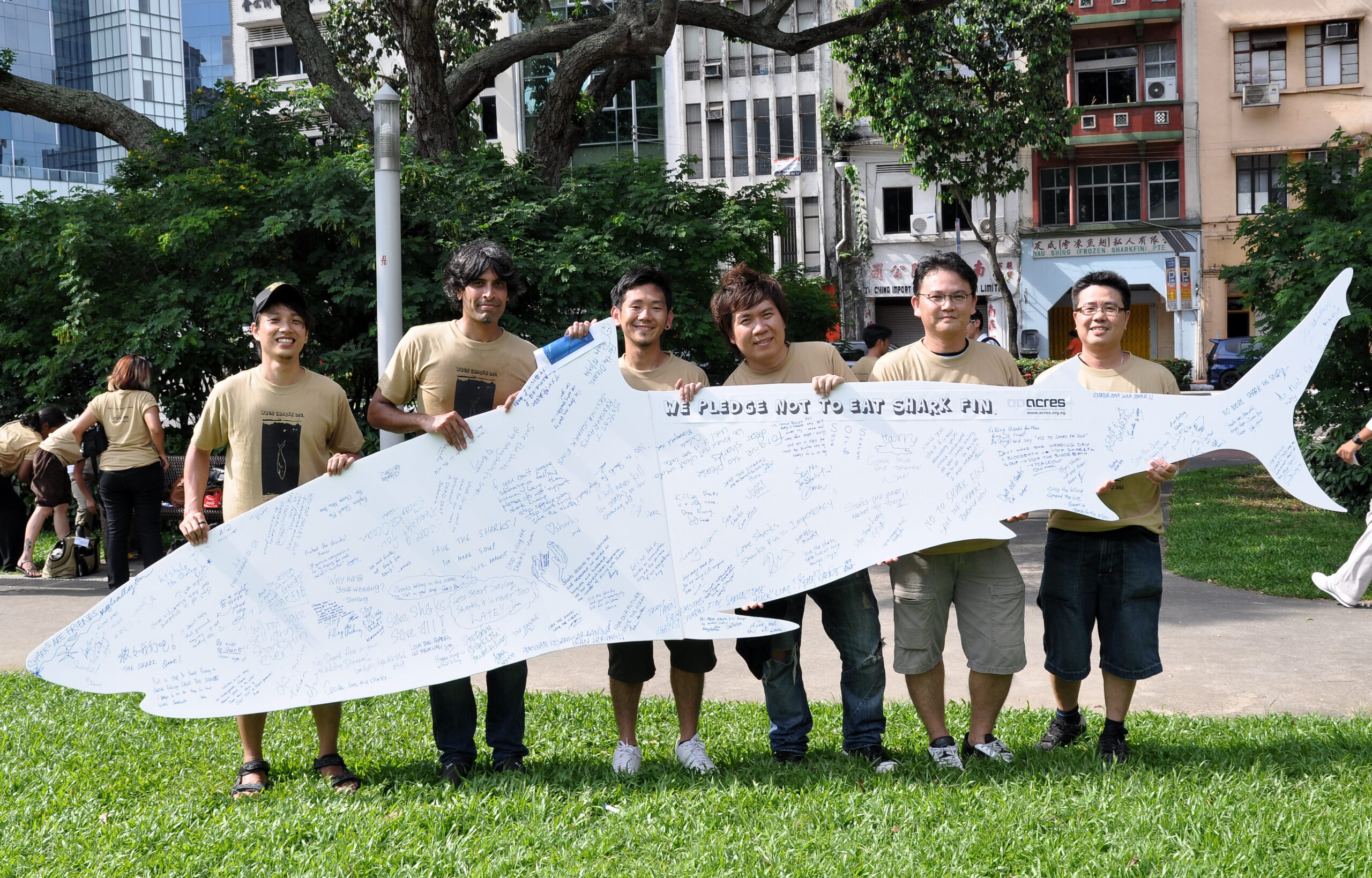
On 18 April 2009, hundreds gathered for Singapore’s first-ever shark conservation rally. Through an interactive “Ocean Jenga” game, participants witnessed the collapse of the marine food chain when shark figures were removed—symbolising the real-world impact of losing sharks. A bride and groom dramatically toppled the structure to highlight how shark fin soup at weddings contributes to ecosystem destruction. Supporters pledged not to consume shark fin on a massive shark-shaped board. The message reached audiences as far as Australia, China, and South Africa.
2. “Break the Tradition, Spare the Sharks” — Orchard Road Mosaic
From 2–4 October 2009, during World Animal Day, members of the public shattered ceramic shark fin soup bowls at The Atrium @ Orchard. The fragments were transformed into a 15-metre-long shark mosaic—symbolising a shift from cruelty to creativity. Celebrities such as Jamie Yeo, Melody Chen, and even beloved local icon Phua Chu Kang joined in. Cruelty-free vegan shark fin soup, sponsored by Fairmont Hotels & Resorts (the first hotel in Singapore to stop serving shark fin), was shared to promote alternatives.
3. “A Wedding Cake with a Strong Message”
To reach newlyweds and wedding planners, ACRES unveiled a symbolic wedding cake made of fondant sharks with severed fins. Created with support from BBDO Singapore, the cake was displayed in bridal studios across the island. It sparked deep conversations, garnered media attention, and led hundreds to pledge their support for shark conservation.
Ongoing Efforts
ACRES continues its advocacy through educational talks, roadshows, school engagements, and public exhibitions—reaching thousands each year. Broken soup bowl pieces from our 2009 campaign are still being transformed into works of art used in our educational programmes—a lasting legacy of compassion and change.
Try a Delicious, Cruelty-Free Alternative
You don’t need shark fins to enjoy this traditional delicacy. Our plant-based shark fin soup recipe recreates the texture and flavour using wholesome ingredients like spaghetti squash (also known as shark fin melon), mushrooms, tofu, and beancurd skin.
A kind choice for the planet. A nourishing choice for you.
Ingredients:
- Yellow beans
- 1 carrot
- Half a spaghetti squash (known as shark fin melon)
- 3 Chinese shitake mushrooms cut into strips
- 2 black and white fungus cut into strips
- 10 grams lily flowers
- 1 tofu cut into strips
- 1 sheet beancurd skin (fu chuk) broken into pieces
- 10 grams celery cut into strips
- 10 grams carrot cut into strips
Seasonings:
- Black soy sauce
- Ground white pepper
- Table salt
- Black vinegar
- Sweet potato starch
Stock:
Cut the carrots into chunks. Boil together with the yellow beans to make the soup stock.
Strain the stock and set aside.
Spaghetti squash:
Cut the squash into quarters and boil in water with skin. Once softened, take out the squash and leave to cool.
Once cooled, peel the strands of the squash away from the skin. Be careful not to tear the strands apart. Keep the strands together so that you get the ‘shark fin’ in a whole piece when served.
Cooking the soup:
Heat oil in a pan. Stir in the stripped carrots and mushrooms until fragrant. Add in the rest of the ingredients to stir, except for the egg whites. Once it’s fragrant, add in prepared stock to ingredients. Add seasoning to taste and black soy sauce for colour. Bring to boil, stir in sweet potato starch. Stop when you get the consistency you prefer. Lastly, add the beancurd skin into the soup and gently place the pieces of ‘shark fin’ into the soup. Simmer for 10mins on low heat.
Finally, serve with a sprig of coriander and a dash of vinegar.