
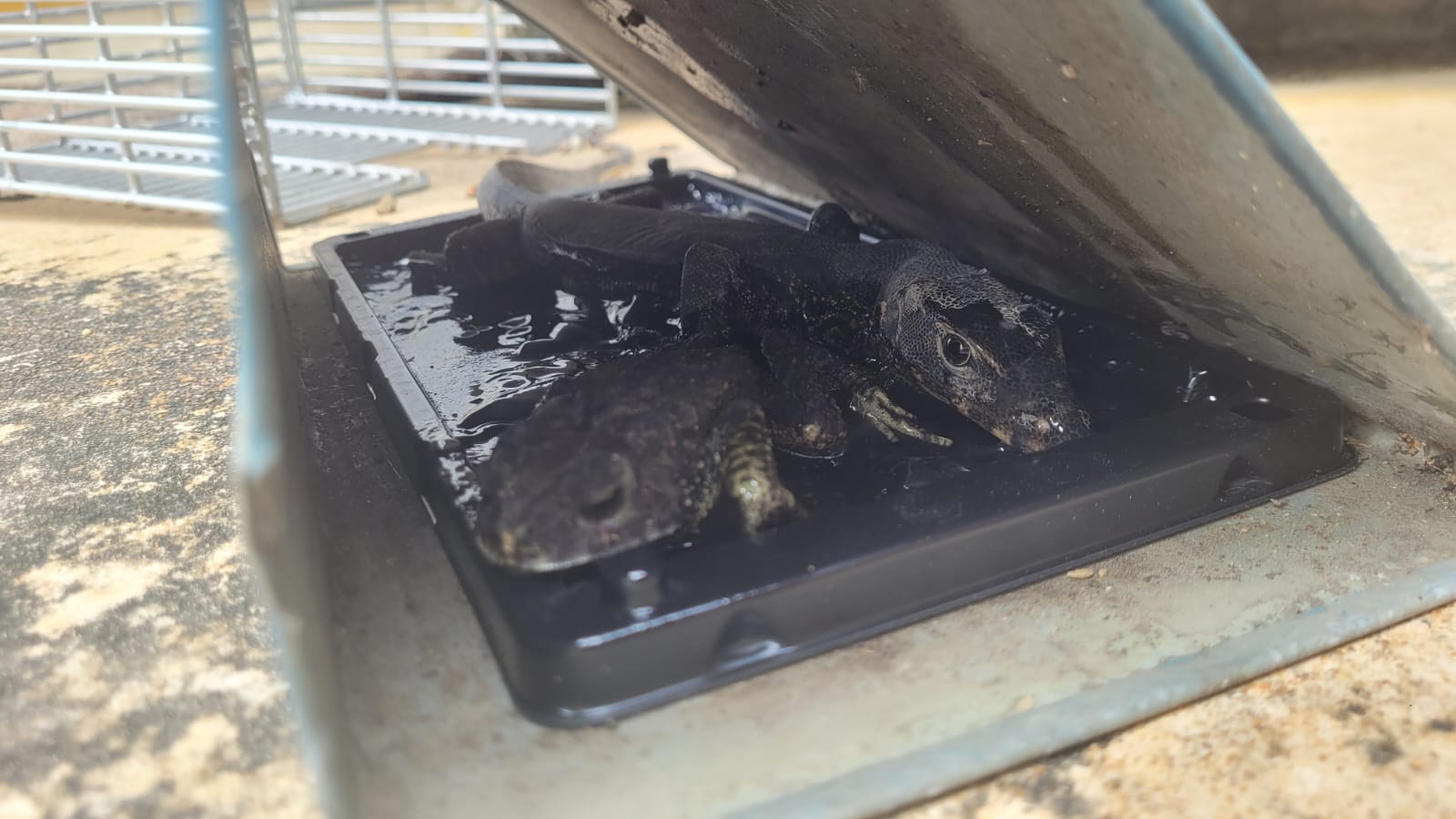
Glue traps are boards or trays coated with a strong adhesive designed to catch rodents and small pests. Unfortunately, in Singapore they also trap many non-target wild animals—from birds and civets to snakes and squirrels, even cats —causing severe suffering.
How They Harm Wildlife
- The adhesive immobilises animals, leaving them to starve, dehydrate, suffocate, or be attacked by predators. The Straits Times
- Injured animals often tear off fur, feathers or even limbs while trying to escape. The Straits Times
- Since 2020, nearly 1,000 protected and non-protected animals have been reported caught in glue traps. The Straits Times
- A recent incident at Gardens by the Bay showed four birds dead after being caught in traps, highlighting the risk even in managed nature areas. CNA
Regulation in Singapore
The authorities recognise the risk to wildlife and have updated guidelines:
- As of May 2024, National Parks Board (NParks) and National Environment Agency (NEA) issued a circular stating that glue traps must not be used in outdoor or semi-open areas unless strictly justified, must be checked daily, and must not exceed 35 cm × 25 cm. The Straits Times
- The government is currently reviewing further regulation and public sale and use of glue traps for the general public. mse.gov.sg
Why It Matters
- Wildlife trapped in glue boards often suffer silently and die from prolonged agony or cannot be rehabilitated. The Straits Times
- The use of glue traps does not address the root cause of pest issues (food waste, shelter, poor sanitation)—so it is often ineffective and harmful. Mothership
- When protected species are caught, it creates conservation concerns and ethical issues for urban ecosystems.
Humane Alternatives & What You Can Do
- Prevention: Eliminate food sources and shelter for pests. Seal garbage bins, fix drainage, remove clutter and vegetation close to buildings.
- Neutral traps: Use enclosed bait-and-trap systems designed for rodents only, which reduce the risk to non-target animals.
- Professional operators: Hire licensed pest control companies who follow guidelines and use humane methods.
- Avoid DIY glue boards in outdoor or semi-open areas where wildlife may access them.
- Report wildlife caught in glue traps: If you find an animal stuck, call the ACRES Wildlife Rescue Hotline
Glue traps may seem like a quick fix for pest problems—but the cost to wildlife is very real. By choosing humane pest-control methods and advocating for better regulation, we protect both animals and our urban environment.